
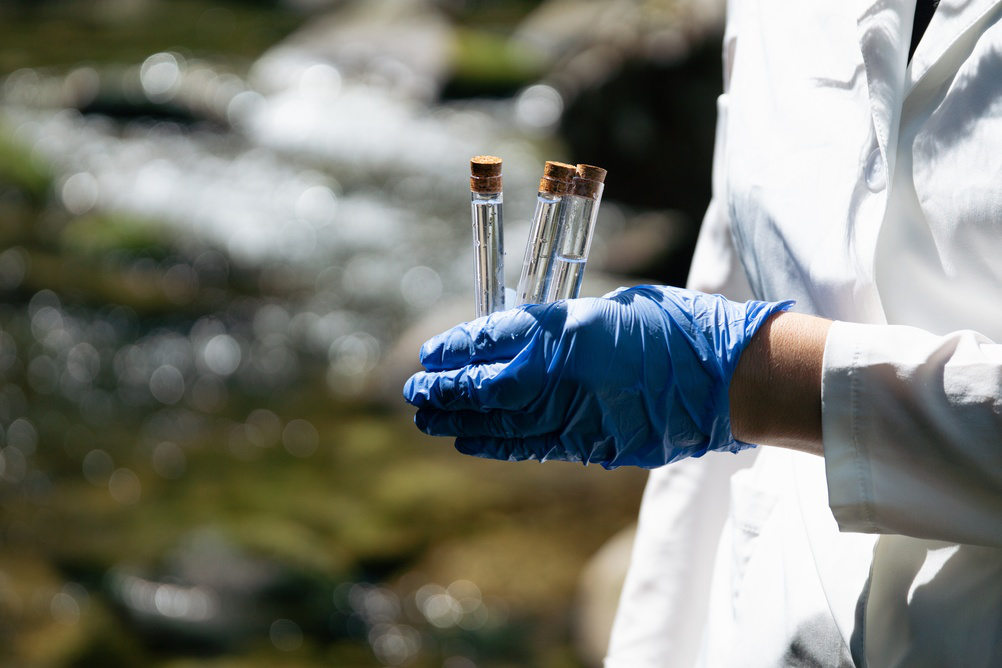
Harmful algal blooms, or HABs, are excessive growth of algae: cyanobacteria in freshwater or dinoflagellates in marine bodies of water. These algae produce toxins and deplete oxygen, negatively impacting public health, aquatic ecosystems and local economies. They often appear as either blue-green, or green in color, but can also appear reddish in marine environments, often referred to as red tides. Following are some key environmental impacts that HAB has on various bodies of water and surrounding areas:
- Dead Zones or Hypoxia: When substantial algae blooms die and decompose, then oxygen is depleted in the area. This can lead to low oxygen, called hypoxia, or anoxia, which can kill small organisms and fish.
- Habitat Impacted: Algae blooms can also reduce the amount of light that penetrates through the water, which can prevent coral and seagrass growth.
- Food Web Disruption: These toxic compounds inhibit the growth of other organisms, disrupting the entire ecosystem.
The health impacts of HABs are far-reaching, impacting both animals and people. Humans can become sick from consuming contaminated fish or shellfish, and exposure to aerosolized toxins can also cause respiratory issues. Symptoms can range from mild reactions, such as eye irritation or skin rashes, to more severe, like respiratory issues, seizures, liver failure or neurological damage. The uptick in HABs in the nation’s waterways is believed to be the result of several issues, including nutrient pollution (sewage and fertilizer runoff) and climate change, which contributes to warmer water and increased runoff.
The Role of AI in Environmental Water Management
Now that the impact of HABs has been recognized, there have been many efforts made to counteract its negative effects. One of the most innovative and promising strategies is utilizing AI or artificial intelligence in the fight for proper environmental water management. AI technology has been successfully employed in a couple of key ways, which are outlined below:
- Predictive Modeling and Forecasting: This involves AI analyzing real-time and historical environmental data in an effort to predict where blooms will occur. This is exemplified in machine learning models, which use Support Vector Machines (SVM), Random Forest (RF) and Artificial Neural Networks (ANN). It can also include deep learning exemplified by Long Short-Term Memory (LSTM) models that forecast blooms by processing sequential data. Diffusion-Based Models like Spatial Temporary Imputation and Prediction (STIMP) and Nutrient-Based Predictions are also part of forecasting and predictive modeling.
- Automated Identification & Imaging: Another way in which AI is being employed to fight back against HABs is through various imaging devices and technologies that make it easier to identify toxic cells. This can include Image Flow Cytobots (IFC), which can capture thousands of algae in minutes, automated classifications, training systems to recognize toxic algal cysts and labeled databases that help collaborate the efforts of AI between scientific bodies and institutes.
- Monitoring and Sensing Technologies: Last, but not least, AI is utilized to counteract HABs by utilizing various hardware platforms for real-time monitoring of water bodies. This can include satellite data integration platforms and geospatial tools, but can also include autonomous robots, like floating robots, or hyperspectral machine learning, which monitors hundreds of spectral bands to detect the presence of algae via pigment.
AI in Action in Algal Blooms
Artificial intelligence (AI) has already been successfully implemented to fight back against harmful algal blooms in several ways. One example of this is when scientists from the NOAA’s Center for Satellite Applications and Research (STAR) along with other partners, including the University of South Florida, paired AI with more than a million satellite images to first detect and then quantify surface floating seaweed and phytoplankton scum throughout global oceans. This research helped scientists to better understand the long-term changes and spatial extent of these floating marine plants.
Another example of AI in action is from NASA, when they utilized CyFi machine learning to pinpoint areas that could contain harmful algal blooms, like rivers, lakes, reservoirs and other small bodies of water. CyFi combines machine learning and high-resolution satellite imagery to determine where the algae are and also determine the areas of greatest risk of HABs presence. MDPI also used a combination of satellite imagery with machine learning to better monitor Lake Erie, which is one of the most negatively impacted water sources in the nation when it comes to the presence of HABs. Remote sensing technologies and predictive modeling can effectively monitor water quality and help predict algal blooms across the globe – a process made more efficient through AI integration.
Benefits and Advantages of Using AI
In general, the methods that utilize AI in some form in the fight to manage HABs are superior to traditional or manual methods in a variety of ways, offering superior scalability, efficiency and proactive capabilities. Traditional methods relied heavily on water sampling followed by laboratory analysis. In contrast, modern AI methods utilize real-time data from IoT sensors and satellite imagery to predict and also detect blooms. This allows for a more rapid response to the problem areas and overall enhances water management and conservation efforts. The following will look at some comparisons between the old manual way of doing things and the AI-led models:
Traditional Manual Method vs. AI-Based Methods
- Efficiency: Time-consuming sampling process vs. rapid, real-time detection, cutting down on response time from days to mere minutes.
- Management: Reactive in nature vs. proactively predicting where blooms might occur before they show up.
- Scalability: Small-scale locations, limited vs. large, wide-scale monitoring using automated sensors and satellite data.
- Accuracy: Limited spatial coverage, making it prone to human error vs highly accurate at identifying trends and even complex patterns.
Put Transformative AI to Work for You
AI is an effective tool that should be embraced for HABs prevention and treatment moving forward. We at AGS Scientific are here to help. We can help you experience the benefits of AI integration for this scientific endeavor, and we understand the challenges that exist in traditional methods. We also know that AI will continue to expand within environmental science and offer even more research and learning opportunities moving forward that will only further enhance the fight against HABs overall.
Ready to improve how you detect and manage harmful algal blooms? AGS Scientific delivers AI-powered solutions that enhance accuracy, speed and scalability. Connect with our team to bring smarter water management to your operation.
